
Also known as the Summer Snapdragon, Angelonia is a striking that is native to Central and South America. Its common name comes from the shape of its flowers, which resemble Snapdragons. Whether you’re planting them in sun-drenched borders or bright summer containers, Angelonia adds height, color, and reliability when the rest of the garden starts to fade. Angelonia is also valued for its long-lasting blooms, heat tolerance, and resistance to pests and diseases. At Martin Garden Center, we’re big fans of this heat-lover for its effortless performance and steady summer blooms.
Our Selection of Angelonia
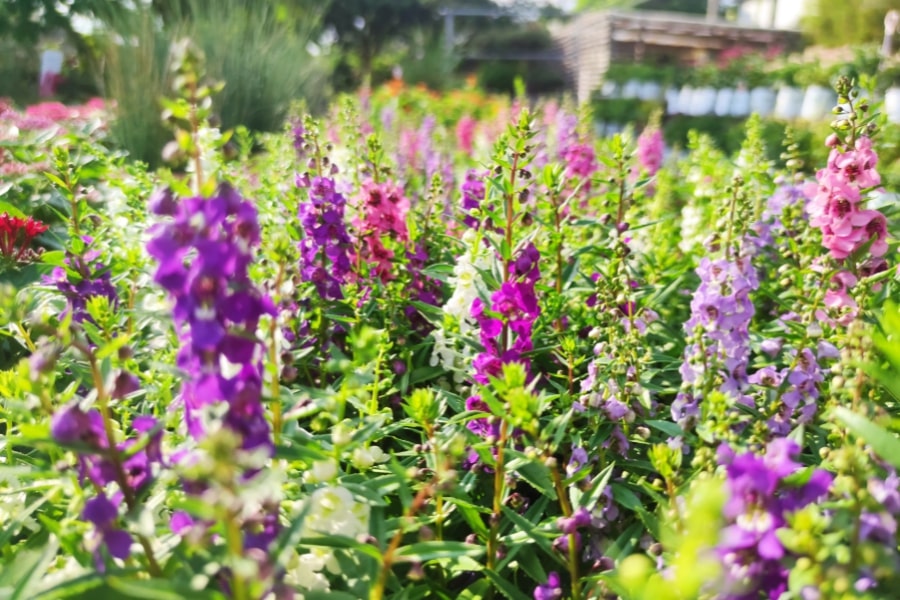
At Martin Garden Center, we carry several exceptional varieties of Angelonia, including the ever-popular Archangel series known for its large flowers and strong garden performance. We highly discourage planting Angelonia until nighttime temperatures remain above 50°F, as cold weather can stunt growth.
Some of our favorites include the Big Series (Big Indigo and Big Snow), recognized for their bold color and vigorous size. The AngelMist® Spreading Series features trailing varieties like Spreading Bluebird and Spreading White—perfect for cascading from containers and garden edges. And for something new, the AngelFlare™ series delivers dramatic, saturated tones in Black and Orchid Pink.
Alonia™ Big Blue – deep blue blooms and strong branching
Alonia™ Pink Flirt – soft pink, compact and early to flower
Alonia™ Snowball – bright white, dense mounding habit
AngelFlare™ Black – rich violet-black spikes, long-lasting color
AngelMist® Bluebird – trailing, sky-blue flowers, great in pots
Growing and Caring for Angelonia
Angelonia thrives in warm and sunny conditions, making it an ideal choice for gardens in regions with hot summers. It requires full sun exposure to achieve its best growth and flowering potential. Angelonia prefers well-draining soil that is rich in organic matter, though it is not particularly fussy about soil pH and can thrive in acidic to alkaline conditions. This plant is relatively drought-tolerant once established, but it still benefits from regular watering, especially during dry periods.
In terms of temperature, Angelonia is quite adaptable, tolerating both high heat and humidity. It can withstand moderately cool temperatures, but it generally prefers a warm climate. If grown in regions with cooler summers, planting Angelonia in a sheltered spot or using microclimates such as south-facing walls can help provide extra warmth. Angelonia is generally disease and pest resistant. They are self-cleaning so they don’t required deadheading. However, they do require pinching to keep strong branching as Angelonia branches are quite brittle.
Angelonia is low-maintenance but can suffer from root rot in poorly drained soil, especially in heavy clay beds. Always plant in raised areas or amend with compost to improve drainage. If stems become brittle or plants appear leggy in midsummer, pinch them back lightly to encourage new growth and branching. Avoid over-fertilizing—too much nitrogen can reduce flower production. In humid climates, ensure good air circulation to prevent fungal issues.
Leaves and Flowers
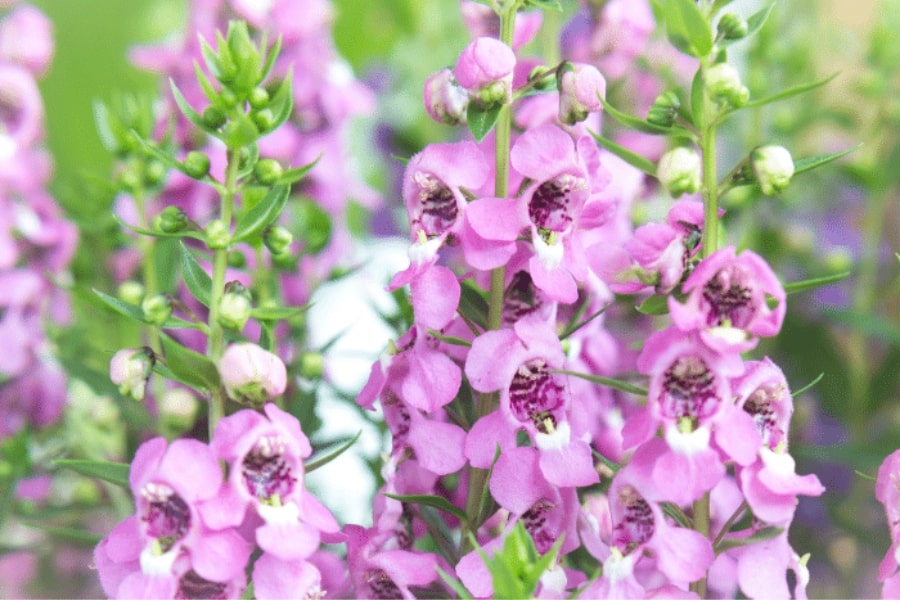
The foliage showcases a rich, glossy green color, often with a slightly toothed or serrated edge. The leaves emit a pleasant fragrance when gently brushed or crushed. This delightful scent adds an extra sensory dimension to the garden experience.
The flowers of Angelonia appear in dense spikes or clusters atop the upright stems, creating a stunning display of blooms that can last for several months. The individual flowers resemble small, snapdragon-like blossoms with a tubular shape and two distinctive lips. Angelonia flowers come in various hues, including shades of pink, purple, blue, white, and bi-color combinations. These cheerful blooms also serve as magnets for pollinators like butterflies and bees.
Uses in the Garden
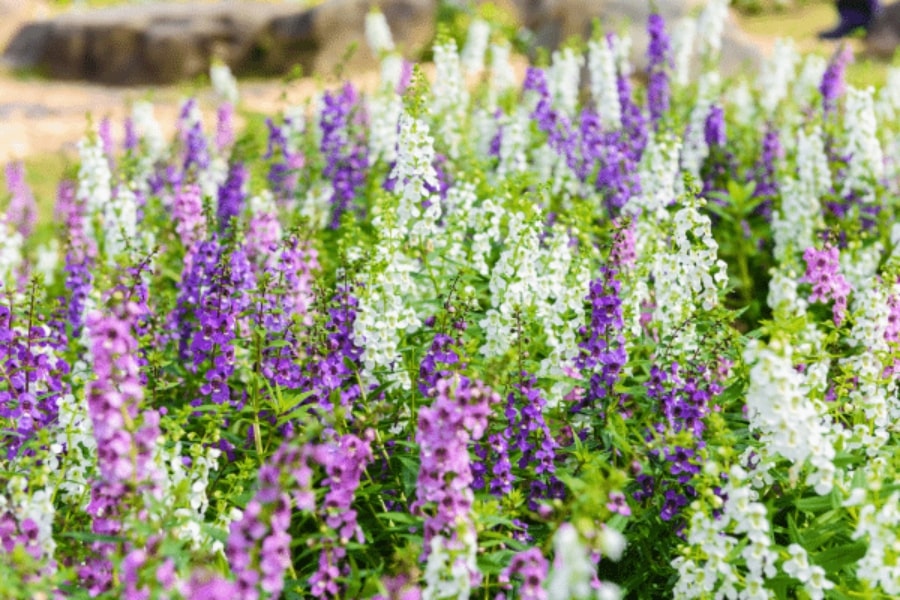
With its tall spikes of colorful flowers and glossy green foliage, Angelonia adds a touch of elegance and vibrancy to gardens, borders, and containers. Angelonia is commonly used as a bedding plant, forming compact mounds of color that bloom profusely throughout summer. Angelonia’s vertical growth and impressive flower spikes create a visually captivating garden display, whether planted in clusters for a bold impact or mixed with other annuals and perennials.
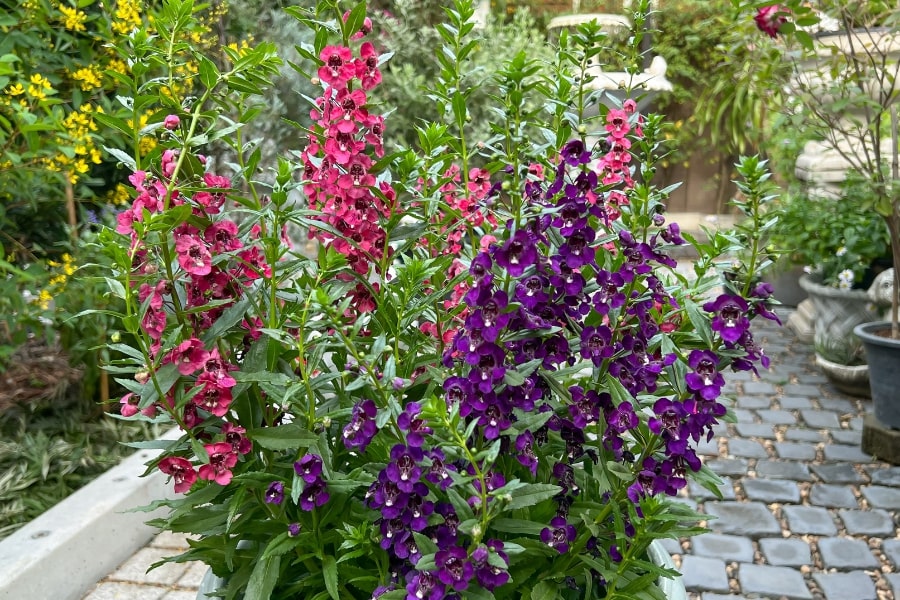
Another good use for the summer snapdragon is in container gardening. Its upright growth habit and long-lasting flowers make it an ideal thriller element in container arrangements, adding height and visual interest to patio pots, hanging baskets, and window boxes. The variety of available flower colors, including purple, pink, white, and blue, allows for endless creative possibilities when designing container gardens.
Companion Planting & Design Tips
Angelonia pairs beautifully with sun-loving annuals such as Calibrachoa, Lantana, and Vinca. In containers, use it as the upright “thriller” alongside trailing plants like Bacopa or Sweet Alyssum. For a striking garden display, mix purple or indigo varieties with yellow or white companions to create bold summer contrast.
Frequently Asked Questions
Is Angelonia Deer-Resistant?
The Summer Snapdragon is considered deer-resistant. Angelonia holds its own against deer browsing. With its sturdy stems and aromatic foliage, it doesn’t typically attract the attention of these sometimes pesky creatures. While no plant is completely immune to deer curiosity, Angelonia’s resilience and subtle scent often keep them grazing elsewhere.
Do Hummingbirds Like Angelonia?
While hummingbirds are generally attracted to brightly colored, tubular flowers, Angelonia may not be their first choice. Angelonia flowers have a different shape compared to typical hummingbird favorites, and the nectar may be more challenging for hummingbirds to access due to the structure of the flower.