
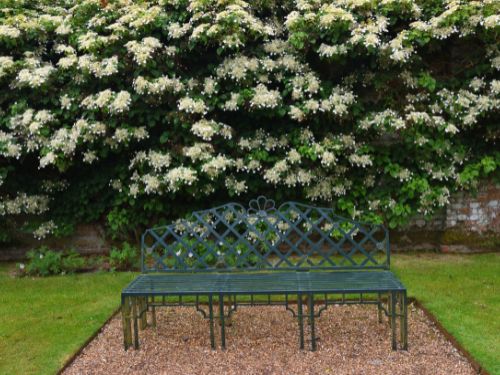
Climbing Hydrangea (Hydrangea petiolaris) is a deciduous, self-clinging vine that takes the charm of hydrangeas to new heights, literally. Native to the woodlands of Japan and Korea, Climbing Hydrangea offers a unique twist to the traditional shrub form of hydrangeas. Its scientific name, Hydrangea petiolaris, pays homage to its long petioles that attach the large, ovate leaves to the climbing stems. This shrub is revered for its ability to scale walls, fences, and arbors with its twining stems, creating a tapestry of lush foliage and delicate lacecap blooms.
Growing & Caring For Climbing Hydrangea
Climbing Hydrangea performs best in partial shade to filtered sunlight. This makes it an excellent choice for north- or east-facing walls and structures, where it can enjoy dappled sunlight without the risk of scorching. Well-drained, fertile soil is ideal for Climbing Hydrangea. Amending the soil with organic matter, such as compost or well-rotted manure, enhances fertility and moisture retention. The vine prefers slightly acidic to neutral soil pH. Regularly testing and adjusting the soil pH can influence the color of the blooms, with more acidic soils promoting blue flowers and more alkaline soils encouraging pink blooms.
Consistent moisture is essential for Climbing Hydrangea, especially during dry spells. Regular watering ensures the vine remains hydrated and supports the development of healthy foliage and abundant blooms. Mulching around the vine’s base helps retain soil moisture, regulates temperature, and suppresses weeds. Adequate water is particularly crucial during the flowering season and hot summer months to prevent stress on the plant. Since Climbing Hydrangea blooms on old wood, excessive pruning should be avoided to ensure the development of flower buds and a robust floral display. The vine can also be trained to grow in a specific direction by guiding its growth with proper support.
Size and Shape
Climbing Hydrangea can reach impressive heights, often growing 30 to 50 feet or more, depending on its growing conditions and the structure it climbs. The vine exhibits a twining and sprawling growth habit, creating a dense and layered appearance.
Leaves and Flowers
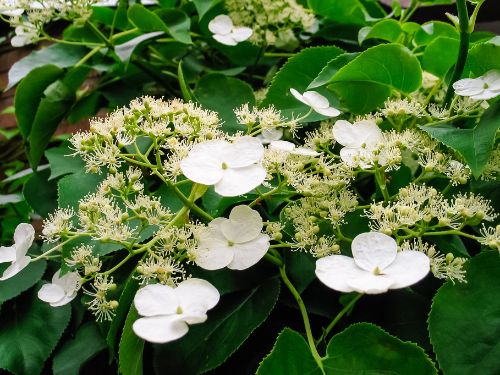
The foliage of Climbing Hydrangea is composed of large, heart-shaped leaves that measure around 3 to 8 inches in length. These leaves are arranged opposite each other along the stems, creating a lush and verdant backdrop. The glossy dark green leaves provide an attractive covering even when the vine is not blooming.
Climbing Hydrangea graces the garden in late spring to early summer with its showy lacecap blooms. The flower clusters consist of small, fertile flowers in the center surrounded by larger, sterile flowers resembling a lacy doily. The blooms can span up to 6 inches in diameter, creating a stunning visual impact. The color palette of the blooms includes white, creating a classic and timeless look. As the summer progresses, the faded blooms persist, adding a rustic charm to the vine.
Uses in the Garden
Climbing Hydrangea’s ability to climb and cover vertical surfaces makes it ideal for accentuating walls, fences, arbors, and trellises. The lush foliage and lacecap blooms create an enchanting backdrop, adding a vertical element to gardens with limited space or a desire for vertical interest.
As a shade-tolerant vine, Climbing Hydrangea is well-suited for shaded or woodland gardens. The vine can ascend tree trunks when planted near trees, providing additional visual interest and creating a harmonious woodland aesthetic.
Climbing Hydrangea is also an excellent choice for creating living privacy screens or natural fences. Planting along fences or boundaries forms a dense and verdant barrier, offering visual and acoustic privacy. The twining stems and clinging roots ensure the vine adheres securely to vertical surfaces, creating a seamless and cohesive green barrier.