
Also known as kidney weed or lawn leaf, Dichondra is a genus of flowering plants in the morning glory family, Convolvulaceae. It is typically a small, herbaceous plant that only grows up to 15 cm tall but spreads several feet wide. Dichondra is known for its trailing or creeping habit, making it an ideal ground cover plant.
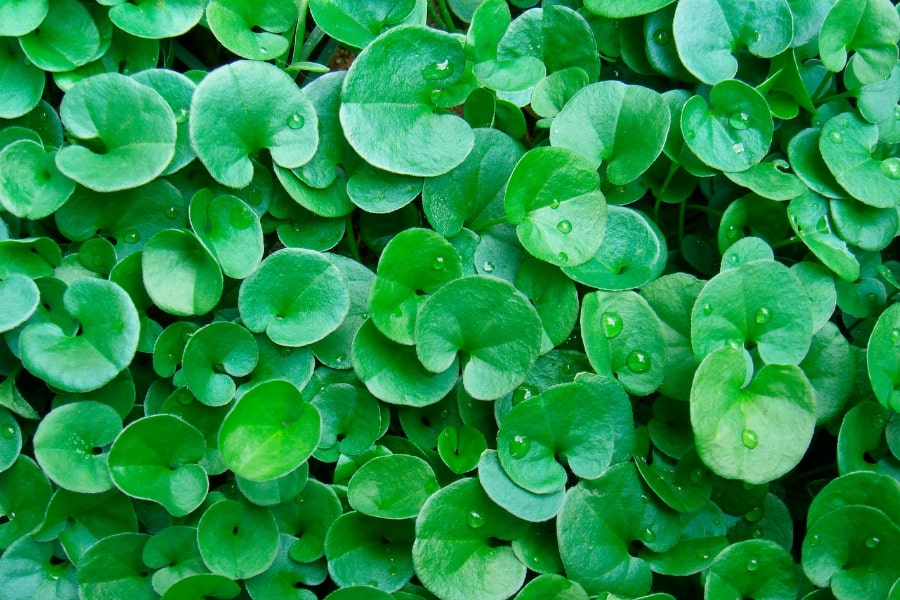
Our Selection of Dichondra
At Martin Garden Center, we grow two varieties of Dichondra:
Both are widely used as ground covers and thrive in hanging baskets and containers, where their trailing habit makes them perfect for spilling over the edges. At Martin Garden Center, we grow both Silver Falls and varieties. We make it a point to stock 4″ Silver Falls Dichondra from early Spring to late Summer, and we also feature Emerald Falls in our mixed hanging baskets to add a unique splash of color and texture.
Growing and Caring for Dichondra
Growing Dichondra is relatively easy, and once established, it becomes one of the most dependable trailing plants available for containers, hanging baskets, and landscape beds. It performs best in well-draining soil that is rich in organic matter and receives plenty of sunlight throughout the day. While Dichondra can tolerate light shade, plants grown in brighter conditions typically develop denser growth, stronger stems, and a fuller cascading habit. Before planting, loosen the soil and incorporate compost or soil conditioner to improve drainage and encourage faster root development. Providing the roots with a healthy foundation helps the plant establish quickly and produce vigorous growth throughout the growing Season.
Regular watering is important, particularly during the first few weeks after planting and during extended dry periods. Dichondra prefers evenly moist soil and performs best when it is not allowed to completely dry out between waterings. When moisture levels become too low, the trailing stems may begin to brown, especially at the tips, which can quickly reduce the plant’s lush appearance. In hanging baskets and containers, where soil dries much faster than in-ground plantings, daily watering may be necessary during the hottest parts of Summer. Applying mulch around landscape plantings can also help conserve moisture, regulate soil temperatures, and reduce plant stress during periods of heat and drought.
Dichondra is a naturally vigorous grower and generally requires very little maintenance to look its best. Unlike many trailing annuals, it rarely needs pinching or pruning to encourage branching, as the stems naturally spread and fill in on their own. When planting 4-inch pots, space them approximately 6 to 12 inches apart to provide adequate room for each plant to expand without becoming overcrowded. Under favorable growing conditions, the silvery or green foliage can quickly knit together to form a dense groundcover or cascade gracefully over the edges of containers and raised beds. If stems become excessively long later in the Season, a light trim can help maintain a tidy appearance and stimulate fresh new growth.
One of Dichondra’s most appealing characteristics is its relatively trouble-free nature. It rarely experiences significant pest infestations and generally avoids many of the common diseases that affect other annual bedding plants. Proper drainage remains the most important factor in maintaining healthy growth, as consistently saturated soil can lead to root problems and decline. Beyond providing adequate water, sunlight, and occasional fertilizer applications during the growing Season, very little maintenance is required. Its elegant trailing habit, heat tolerance, and low-maintenance nature make Dichondra an excellent choice for gardeners seeking a high-impact plant that delivers reliable performance with minimal effort.
Leaves and Flowers
The leaves of Dichondra are small, rounded, and vibrant green or, in the case of Silver Falls Dichondra, gorgeous silver. The plants can form lush mats that gracefully carpet the ground or spill over containers. Their soft, velvety texture invites gentle caresses and adds a touch of elegance to any landscape.
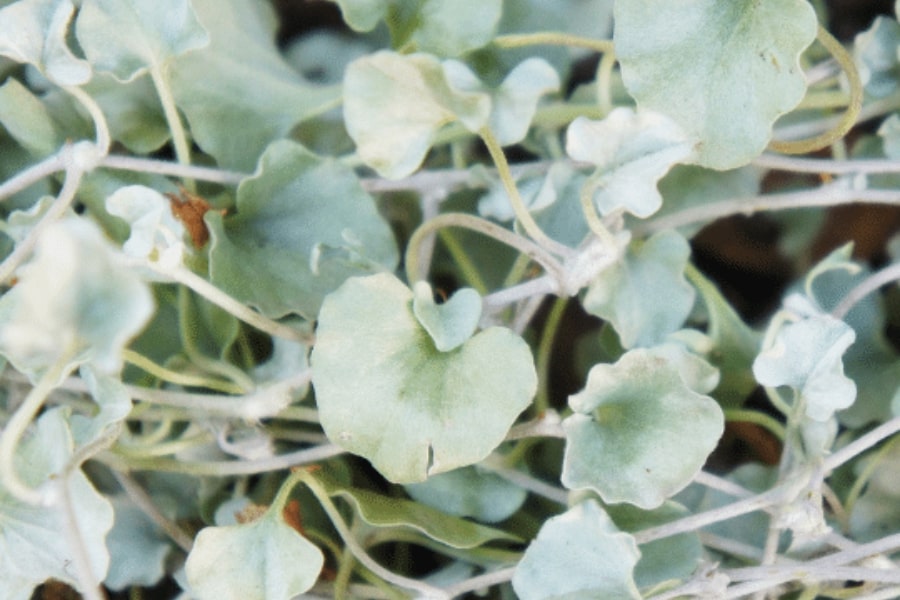
Uses in Gardening & Landscaping
One of the primary uses of Dichondra is as a ground cover. Its low-growing and spreading nature allows it to form a lush carpet-like cover over the soil, suppressing weeds and providing an aesthetically pleasing alternative to traditional lawns. Dichondra is also used in hanging baskets and garden containers. Its trailing and cascading growth habit creates a graceful and soft appearance, making it an ideal choice for hanging baskets where its foliage can gracefully spill over the edges. Dichondra can trail up more than 6 feet during one season.
Furthermore, its adaptability to various soil types and ability to thrive in both sun and partial shade make Dichondra a versatile and reliable choice for container gardening in different environments. Beyond its decorative uses, Dichondra has practical benefits in erosion control. Its dense mat of foliage helps stabilize soil, preventing erosion on slopes and hillsides.
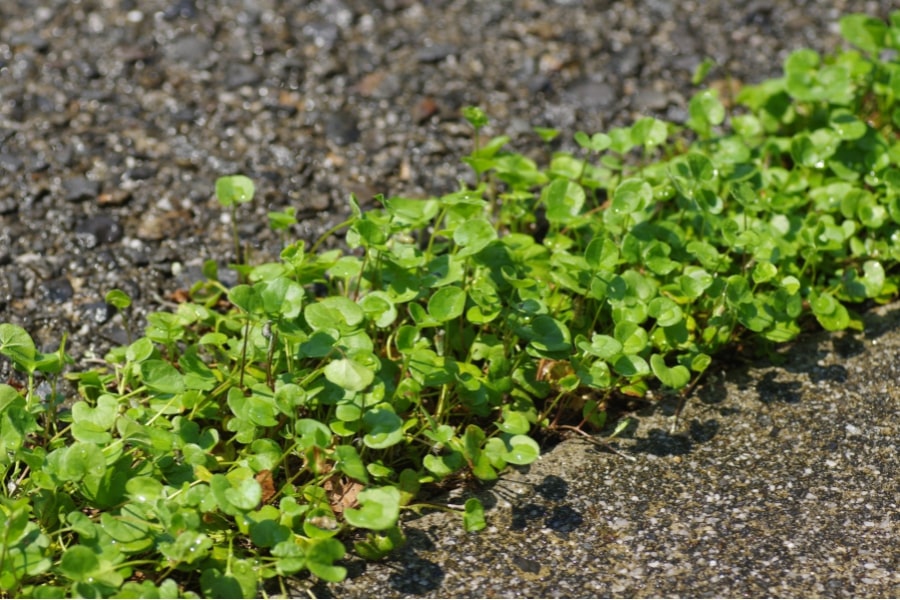
Silver Falls Dichondra
One of the most popular species of Dichondra is Dichondra argentea, commonly known as Silver Falls Dichondra. This plant is widely used as a ground cover and it is also commonly used in hanging baskets and containers, where it can be grown as a trailing plant. At Martin Garden Center, we grow Silver Falls Dichondra and also purchase it from our vendors. We attempt to stock 4″ Silver Falls Dichondra from early spring to late summer. We also use it in mixed hanging baskets as a spiller.
Frequently Asked Questions
Does Dichondra Die In Winter?
Dichondra is a perennial groundcover plant in USDA hardiness zones 7 through 11. In these zones, dichondra is typically evergreen and can survive mild winters. However, it may suffer damage or die if exposed to freezing temperatures for extended periods. In colder climates outside its hardiness zones, dichondra is often treated as an annual or grown as a houseplant. In these areas, it’s likely to die off completely during the winter months unless protected from frost and cold temperatures.
Is Dichondra Invasive?
Dichondra is not typically considered invasive in most regions where it is cultivated. However, in areas where dichondra is well-suited to the climate and soil conditions, it can spread quickly and become difficult to control, particularly if it escapes cultivation and establishes itself in natural habitats. Its ability to form dense mats and outcompete native vegetation can disrupt local ecosystems.
Is Dichondra Toxic To Dogs?
Dichondra plants, including Dichondra argentea (silver ponyfoot), are generally considered non-toxic to dogs. While there isn’t extensive research specifically on the toxicity of dichondra to dogs, it is not listed as toxic by the American Society for the Prevention of Cruelty to Animals (ASPCA) or the Pet Poison Helpline. However, even non-toxic plants can cause gastrointestinal upset if ingested in large quantities.