
For height and texture, Snapdragons are always good. Snaps provide fall and early winter color, but they may or may not last through the winter depending on the weather. If they die back to the ground in the winter, they often come back in the Spring.
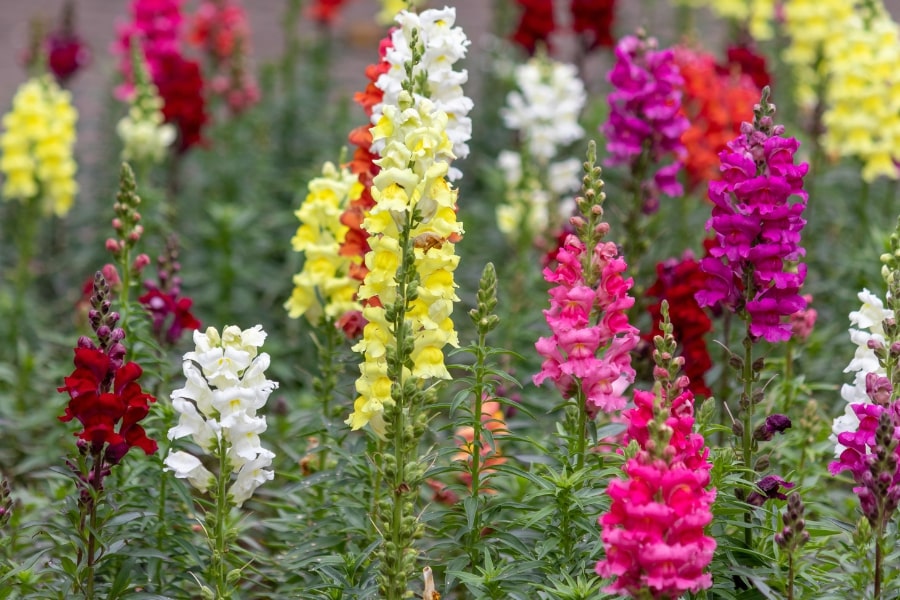
Our Selection of Snapdragons
We carry Snapdragons in both flats and 4-packs. Our selection includes the Snaptini series, known for its smaller stature and abundance of colorful blooms. For gardeners seeking mid-height options, we offer the Snapshot series and the Speedy Sonnet series, both of which strike a balance between manageable height and prolific flowering. And for those who want dramatic vertical impact, we feature the tall Rocket Series, which can shoot up to several feet and create an impressive backdrop in flower beds. Our Snapdragons are organized by height at maturity and by bloom color on the dedicated Snapdragon table in the Bedding section.
Growing and Caring for Snapdragons
Snapdragons are cool-season favorites that bring vertical drama and cheerful color to the garden. They thrive in full sun, though in regions with very hot summers, some afternoon shade will help prolong their flowering season. Aim for at least 6 hours of direct light daily for strong stems and abundant blooms. Snapdragons prefer fertile, well-draining soil with a slightly acidic to neutral pH. Amending heavy soils with compost or peat moss improves both drainage and fertility. In containers, choose a lightweight potting mix formulated for annuals.
These plants grow best in cooler weather, making them ideal for spring and fall gardens. They can tolerate light frosts and often bounce back after cold nights, but extended heat will slow down or stop blooming. For best results, plant them outdoors once the danger of frost has passed in spring, or establish them in early fall for a flush of autumn blooms. Water consistently to keep soil evenly moist, but avoid waterlogging, as soggy conditions can lead to root problems. Mulching helps regulate soil temperature and conserve moisture. Feeding snapdragons every 4–6 weeks with a balanced, water-soluble fertilizer will promote continuous growth and flower production. Deadheading spent blooms encourages additional flowering, while pinching young plants back can create bushier, fuller growth.
Leaves and Flowers
Snapdragon foliage is narrow, lance-shaped, and medium to dark green, forming neat mounds of leaves that give way to tall, upright flower spikes. The foliage remains attractive throughout the season and provides a clean backdrop for the showy flowers.
The real highlight is the flowers themselves. Snapdragons produce dense spikes of tubular, dragon-shaped blooms that open from the bottom upward, giving a long-lasting display. Flowers come in nearly every color imaginable—red, yellow, orange, pink, purple, white, and many bicolors. Their unique “snapping” form, which opens when gently squeezed, delights children and gardeners alike. Depending on the variety, blooms range from dwarf (6–10 inches) to tall types that can reach 3 feet or more. Many varieties also carry a light, sweet fragrance, especially in cooler weather.
Uses in the Garden
Bedding Plants: Snapdragons are excellent for mass plantings, borders, and cottage gardens. Their upright habit and wide range of colors make them perfect for adding structure and vertical interest to beds.
Container Gardens: Compact and dwarf varieties of snapdragons thrive in pots, window boxes, and patio planters. They combine well with trailing plants such as lobelia or ivy for a balanced container display.
Cut Flowers: Snapdragons are prized as cut flowers, with long stems and vibrant blooms that last well in arrangements. Harvest them when the lower flowers on the spike are open for the longest vase life.
Pollinator Gardens: Snapdragons attract bees, hummingbirds, and other pollinators with their tubular flowers and bright colors. Planting them alongside other nectar-rich annuals helps support a pollinator-friendly garden.