
Also known as Million Bells, Calibrachoa is a very popular, versatile flowering plant belonging to the Solanaceae “nightshade” family. Its flowers bear a resemblance to those of traditional Petunias, leading to another nickname “Mini Petunia.” However, Calibrachoa and Petunia are different plants.
Calibrachoa thrives in full sun and well-draining soil, where it can receive at least six hours of direct light each day to produce its signature nonstop blooms. In the garden, it shines in hanging baskets, window boxes, and container arrangements, cascading beautifully over the edges and pairing perfectly with other sun-loving annuals.
Our Selection of Calibrachoa
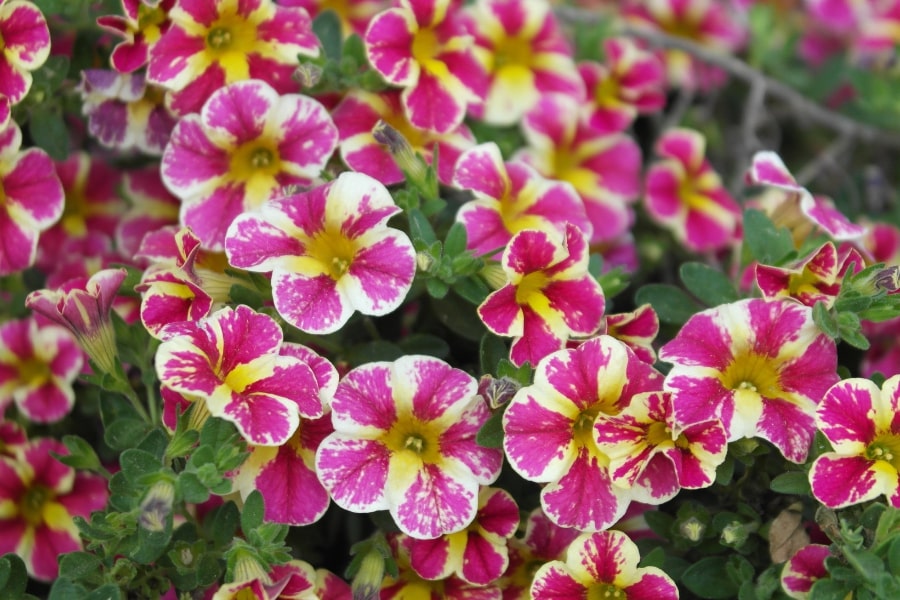
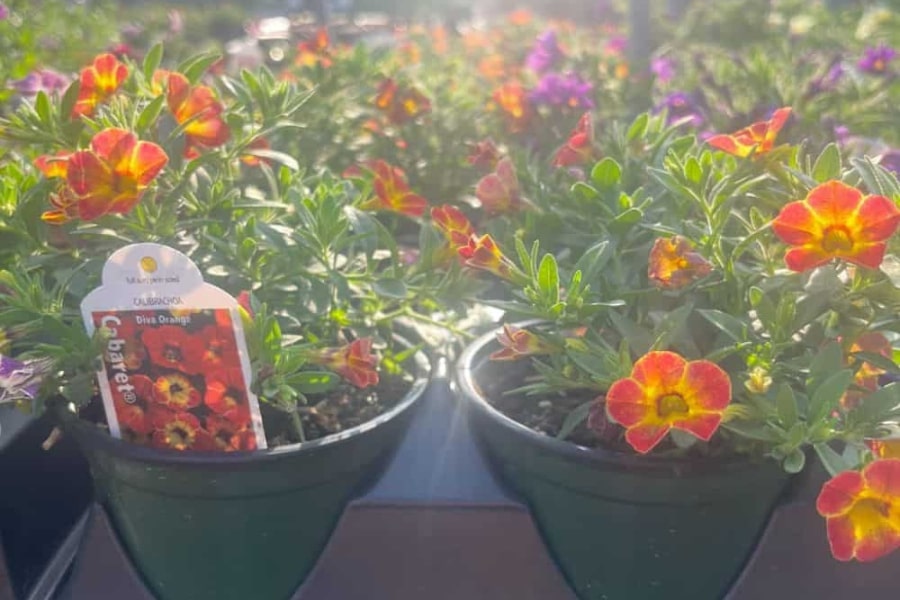
At Martin Garden Center, we have an entire section devoted to Calibrachoa and that section usually contains 24+ varieties at any given time. We also grow hundreds of Calibrachoa hanging baskets in every color and mixed colors. And, we often use Calibrachoa in our mixed hanging baskets (with Petunias or Lobelia, etc) as well.
We grow thousands of Proven Winner Superbells® in 4″ each year, and thousands of Million Bells in 4″ containers. Some of our favorites include Cha Cha Fuchsia, Mini Famous Neo Violet Ice, Colibri Yellow, Cabaret Goodnight Kiss, Calitastic Cappuccino, Callie Eclipse Lavender, Chameleon Blueberry Scone, Superbells Pomegranate Punch, Superbells Coral Sun, and the list goes on and on.
To see our extensive list of plants we grow, the trial rankings of each plant, and the general time frame the plant will be available, see our Calibrachoa Summary Table (TO BE ADDED).
Growing and Caring for Calibrachoa
Calibrachoa thrives in full sun or partial shade. However, this plant performs best when exposed to at least 6 hours of direct sunlight daily. Providing some afternoon shade in hotter regions can help protect the plant from scorching. Calibrachoa is a warm-season plant and prefers temperatures between 60°F and 85°F (15°C and 29°C). It is not frost-tolerant and should be protected from cold temperatures.
Quality soil is crucial for the healthy growth of Calibrachoa. A lightweight potting mix enriched with organic matter works well for container gardening. In garden beds, amend heavy clay soil with compost or organic matter to improve drainage. Calibrachoa requires regular watering to keep the soil consistently moist but not waterlogged. Ensure the soil is evenly moist, especially during hot and dry periods. Avoid overwatering, as this can lead to root rot and other problems.
Regular fertilization is essential for continuous blooming. We recommend Fertilome Garden Cote 6, which provides a slow-release six-month feed. Supplement occasionally with a high-phosphorous fertilizer such as Jack’s Blossom Booster for more blooms. Also, periodically trim back Calibrachoa’s leggy or overgrown stems to maintain a compact and bushy shape. Calibrachoa does not require deadheading as it is self-cleaning. However, pinching is a necessity. For our hanging baskets, we recommend pinching 1-3 legs each week to keep your plant compact and healthy.
Common Issues and Prevention
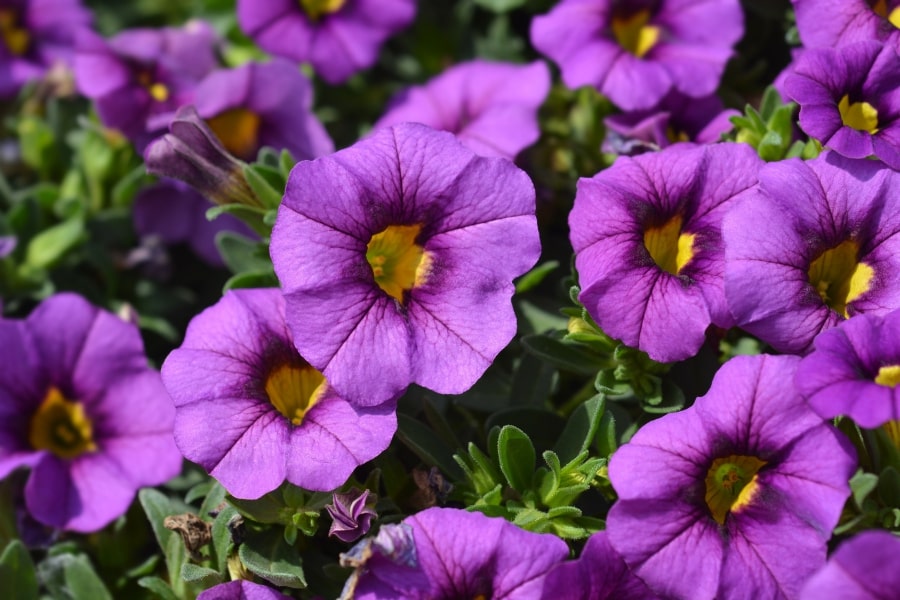
Calibrachoa is susceptible to certain pests and diseases. Overwatering or poorly drained soil can lead to root rot. To prevent this, ensure proper drainage, use well-draining soil, and allow the top layer of soil to dry slightly between watering. Calibrachoa is also susceptible to powdery mildew, a fungal disease that appears as a white powdery coating on leaves. Provide good air circulation, avoid overhead watering, and remove affected plant parts promptly. Fungicidal sprays may be necessary in severe cases.
Botrytis blight, or gray mold, causes fuzzy grayish-brown spots on flowers and leaves. Improve air circulation, space plants adequately, and remove any infected plant material. Particularly look underneath your plant when removing affected areas. Fungicidal treatments can be used as a preventive measure.
Calibrachoa is most susceptible to three pests: Aphids, Spider Mites and Thrip. These common pests can infest Calibrachoa plants, causing damage to foliage and flowers. Regularly inspect plants and use organic pesticides including insecticidal soap for Aphids, neem oil for Mites, and Spinosad for Thrip to control infestations. Encouraging natural predators like ladybugs can also help keep these pests in check. Be sure to check out our guide for preventing and prosecuting spring pests.
In the South Carolina upstate, around late May early June, you may notice that your Calibrachoa slow down flower production or even stop flowering altogether. This is caused by bud worms. Butterflies and moths have free roaming capability in the late spring/early summer and they can and will lay eggs on your Calibrachoa. Those hatched eggs result in small worms that cannot be generally seen by the naked eye (at least not when you are 50 yrs or older) but you will see the damage. Small holes in the petals of your flowers are your first sign. Your solution is a simple spray with BT (Bacillus Thuringensis), an organic pesticide, and within a week, your Calibrachoa will be floriferous once again.
Size & Shape
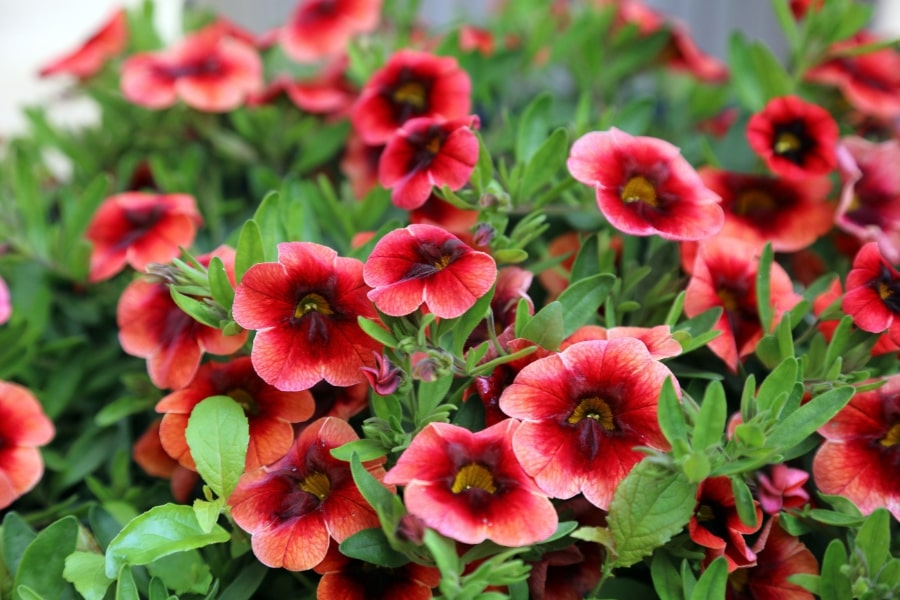
Calibrachoa plants typically have a compact and trailing growth habit. The size and shape of Calibrachoa plants can vary depending on the variety and growing conditions. On average, they reach a height of 6 to 12 inches and spread up to 18 to 24 inches. The trailing stems can grow several feet long, making Calibrachoa ideal for hanging baskets, window boxes, and containers. They form cascading mounds of lush foliage and produce numerous small, trumpet-shaped flowers.
Frequently Asked Questions
Does Calibrachoa Come Back Every Year?
Calibrachoa is typically grown as an annual, but its ability to come back every year depends on the local climate and conditions. Calibrachoa may exhibit perennial characteristics in regions with mild winters, surviving and blooming again in the following growing season. Here at Martin Garden Center, we treat Calibrachoa as an annual, but feel free be patient in the spring and wait and see if your Calibrachoa returns.
Is Calibrachoa Deer Resistant?
Calibrachoa is generally considered deer-resistant. While no plant can be completely immune to deer feeding preferences, Calibrachoa is less likely to be a target for deer browsing. Its foliage is not typically a favored food source for deer.
What Should I Plant With Calibrachoa?
Calibrachoa pairs beautifully with other sun-loving annuals that match its trailing habit and nonstop blooms. Plants like Verbena, Lobelia, Petunias, Bacopa, and Sweet Alyssum help create full, balanced containers with color and texture all season long. When choosing companions, it’s important to match Calibrachoa’s preferences for full sun, consistent moisture, and well-drained soil to keep everything growing evenly. You can also combine upright plants with trailing varieties to build layered, professional-looking planters. For a full list of recommended companion plants and detailed planting ideas, see our guide: What to Plant with Calibrachoa
Why Is My Calibrachoa Dying?
Calibrachoa, commonly known as Million Bells, can struggle when exposed to watering issues, poor drainage, inconsistent light, or nutrient-deficient soil. These plants prefer full sun, evenly moist but never soggy soil, and warm, steady temperatures, making them sensitive to overwatering, cold drafts, and sudden environmental changes. Pests like aphids or spider mites, along with fungal problems such as powdery mildew, can also weaken the plant if not identified and treated promptly. Some Calibrachoa decline simply because they’re overcrowded or haven’t been lightly pruned—pinching one trailing strand from each plant weekly (starting three weeks after planting) keeps them blooming without causing stress. For a deeper look at troubleshooting issues, check out this Guide on Keeping Calibrachoa Healthy.