
Pansies are a staple of Southern gardens, blooming through Fall, Winter, and early Spring to provide essential color in cooler months. Even after Winter storms, they remain viable, with their blooms bouncing back once the ice and snow melt. Their ability to thrive in cold weather makes them a reliable choice for seasonal landscapes, adding bright, cheerful color when most other flowers have faded.
We keep our pansy tables stocked with over 200 flats from September through early November, then reduce to around 80 flats through mid-February to early March. While upright pansies are great for landscaping and container gardens, trailing pansies are best suited for baskets and planters. Due to high demand, our 4″ trailing pansies often sell out by December, so early shopping is recommended.
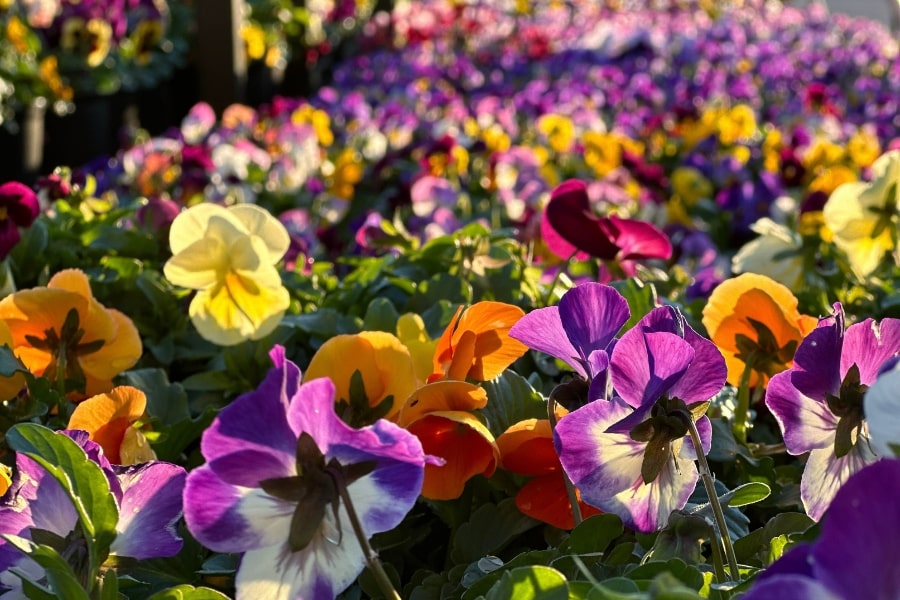
Our Selection of Pansies
At Martin Garden Center, we grow and sell thousands of pansies each year, offering a wide range of colors and varieties. Our 4″ trailing pansies are grown in-house, while upright pansies come in 4-packs and flats sourced from trusted vendors. Popular varieties include Delta, Matrix, Majestic Giant, and more, ensuring customers have plenty of options for their gardens, containers, and hanging baskets.
How to Grow & Care for Pansies
Pansies thrive when their growing conditions reflect their cool-season preferences. They perform best in full sun to partial shade, especially in areas where afternoons get hot. Aim for at least 4–6 hours of sunlight daily, with some afternoon shade to keep plants from wilting in warmer regions. Pansies prefer rich, well-draining soil with a slightly acidic to neutral pH. Amending clay or sandy soils with compost or peat moss improves drainage and fertility. When grown in containers, use a lightweight potting mix formulated for annuals. Pansies prefer cool weather and will bloom their best in spring and fall. They tolerate light frosts but struggle in extreme heat, often fading in summer before reviving again in cooler temperatures.
Keep the soil consistently moist but never soggy. Water pansies regularly, especially during dry spells, to prevent the soil from drying out completely. Mulching around plants helps regulate soil temperature, conserve moisture, and reduce weeds. Feed with a balanced, water-soluble fertilizer every 2–3 weeks throughout the growing season to encourage healthy growth and abundant flowering. Avoid over-fertilizing with nitrogen, which produces leafy plants with fewer blooms.
Unlike some flowers that require constant deadheading, pansies respond well to removing spent blooms and seedpods. Deadheading prolongs their flowering season and keeps the plants looking neat. Modern hybrid pansies often bloom continuously with large, long-lasting flowers, but keeping up with deadheading will reward you with even more vibrant displays.
Leaves and Flowers
Pansy leaves are oval to lance-shaped, with scalloped edges and a soft, slightly fuzzy texture. The foliage is medium green and forms a low, compact rosette at the base of the plant. Leaves remain relatively tidy, providing a clean backdrop for the showy flowers.
The real stars are the flowers. Pansy blooms are large, flat-faced, and velvety, often featuring striking blotches or “faces” in the center. Flowers come in a wide array of colors—deep purples, rich blues, cheerful yellows, crisp whites, oranges, and bi-colors—making them one of the most versatile bedding plants available. Depending on the variety, blooms can measure from 2 to 4 inches across and often carry a light, sweet fragrance, especially in the early morning.
Uses in the Garden
Bedding Plants: Pansies are a staple in garden beds, borders, and mass plantings. Their low-growing, compact habit makes them perfect for colorful displays in spring and fall landscapes. Plant them in clusters for bold swaths of color.
Container Gardens: Pansies shine in pots, window boxes, and hanging baskets. Combine them with trailing ivy, dusty miller, or ornamental cabbage and kale for eye-catching seasonal arrangements. Their versatility makes them ideal for porches, patios, and entryways.
Seasonal Color: Because they tolerate cooler weather, pansies are often planted when few other flowers are blooming. They’re perfect for extending color into late fall and early spring, when gardens otherwise look bare.
Pollinator Gardens: While not the top nectar source, pansies attract bees and other early pollinators when few alternatives are available. Their bright colors also add cheer to pollinator-friendly landscapes.