
Loved across continents for its vibrant blooms, Petunia remains one of the most popular flowering plants in the world. With hundreds of cultivars in every imaginable shade—from pastel pinks and snowy whites to deep purples and fiery reds—Petunias offer endless versatility in garden design. These hardy annuals thrive in full sun and well-draining soil, rewarding gardeners with continuous color from spring through frost.
Many gardeners confuse Petunias with Calibrachoa (often called Million Bells), and while they look similar, Petunia & Calibrachoa are different plants. While both are known for their vibrant and abundant blooms, Petunias blooms are larger & often bolder for adding color and charm to gardens, containers, hanging baskets, and borders.
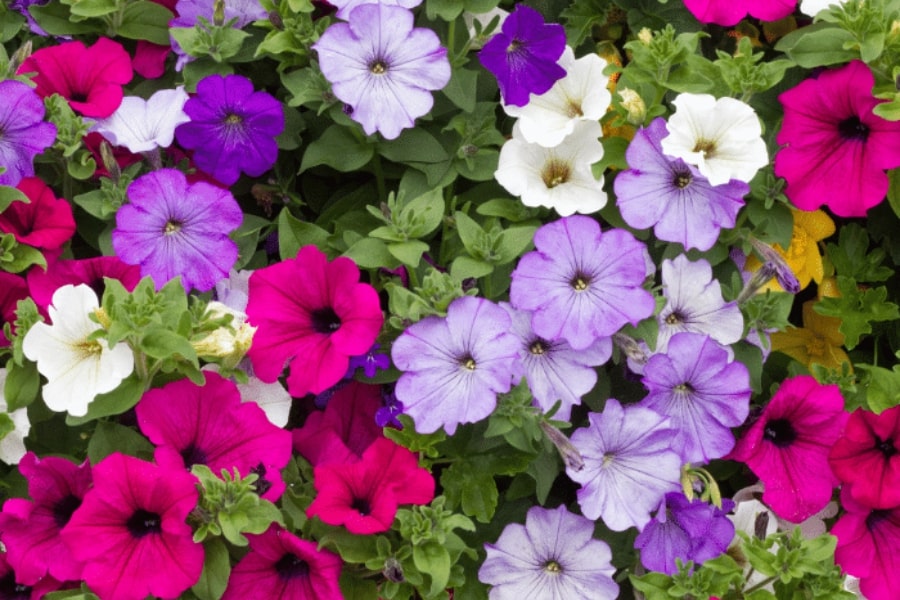
Our Selection Of Petunias
At Martin Garden Center, we have an entire section devoted to Petunias, and we generally offer more than 20 varieties of 4″ Petunias at any given time.
Our ever-popular Proven Winner Supertunias, though priced higher than other petunias, are worth every penny. We grow around 3,000 Proven Winner Supertunias in 4″ containers, representing about 15 different varieties, and they sell quickly in the early Spring. Among these, we especially love the Supertunia Bubble Gum, Supertunia Fuscia, and Supertunia Silverberry due to their compact growth habits, ability to tolerate both heat and cold, and their abundant blooming.
In addition to these, we cultivate many other popular Petunia varieties, including Wave, Capella, Amore, Cascadia, Ray, Headliner, and Crazytunias (including the Black Mamba), as well as 10 varieties of Petunia hanging baskets in all colors and mixed baskets of Petunias. In our bedding section, we also carry flats of various types of Petunias—though be prepared for the extra care required for deadheading.
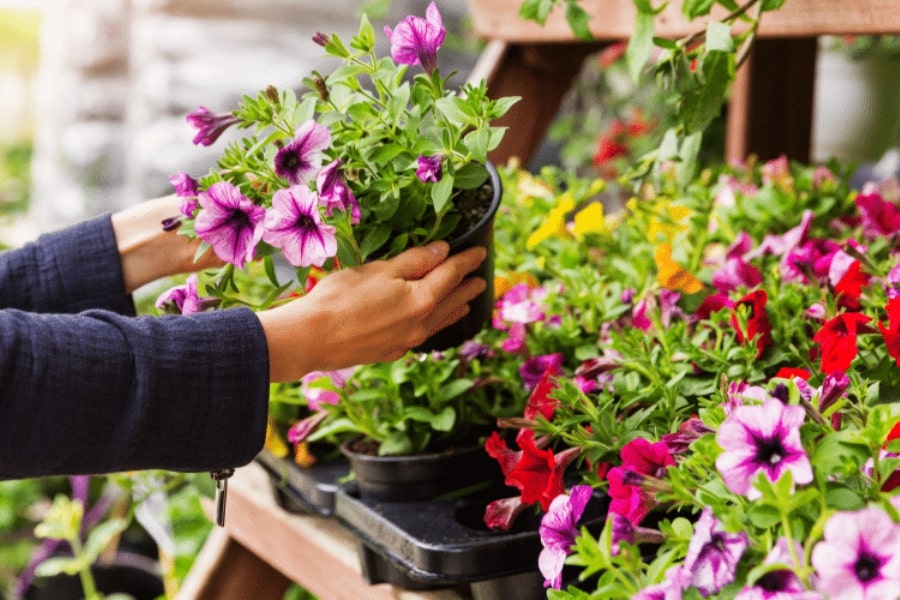
How to Grow Petunias
Petunias are relatively easy to grow, and with the proper care, they can produce abundant blooms throughout the growing season. Here are some important factors to consider when growing Petunias:
- Petunias thrive in full sun, requiring at least 6 to 8 hours of direct sunlight daily. They can tolerate some partial shade, especially in hot climates, but prolonged shade may result in fewer blooms and leggy growth.
- Petunias are warm-weather plants and prefer temperatures between 60°F and 70°F (15°C to 21°C). They can tolerate higher temperatures but may require more frequent watering in hot weather. It’s important to note that some varieties are more heat-tolerant than others, so selecting the appropriate variety for your region is crucial.
- Petunias prefer well-draining soil that is rich in organic matter. The soil should retain moisture while allowing excess water to drain to prevent root rot. Amending the soil with compost or well-rotted manure before planting can improve its fertility and drainage.
- Petunias require regular watering to moisten the soil but not waterlogged. Avoid overhead watering, as wet foliage can lead to fungal diseases. Water at the base of the plant in the morning or early evening to minimize evaporation and allow foliage to dry before nightfall.
- Petunias are heavy feeders and benefit from regular fertilization throughout the growing season. Incorporate a balanced slow-release fertilizer into the soil at planting time and supplement with a water-soluble fertilizer every two weeks or as the manufacturer recommends. This helps promote vigorous growth and continuous blooming.
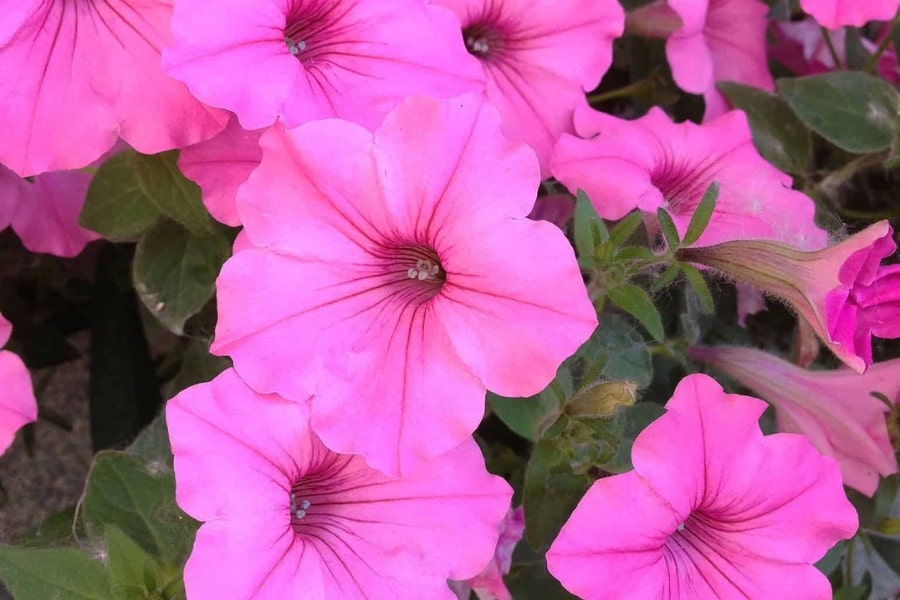
Common Issues and Prevention
Petunias are not as susceptible as other plants to pests such as Aphids, Spider Mites and Thrip. However, it is wise to regularly inspect plants and use organic pesticides including insecticidal soap for Aphids, neem oil for Mites, and Spinosad for Thrip to control infestations. Encouraging natural predators like ladybugs can also help keep these pests in check.
Botrytis blight, or gray mold, causes fuzzy grayish-brown spots on flowers and leaves. Improve air circulation, space plants adequately, and remove any infected plant material. Particularly look underneath your plant when removing affected areas. Fungicidal treatments can be used as a preventive measure.
In the South Carolina upstate, around late May early June, you may notice that your Petunia flower petals have holes in them. This is caused by bud worms. Butterflies and moths have free roaming capability in the late spring/early summer and they can and will lay eggs on your Petunia. Those hatched eggs result in small worms that cannot be generally seen by the naked eye (at least not when you are 50 yrs or older) but you will see the damage. Small holes in the petals of your flowers are your first sign. Your solution is a simple spray with BT (Bacillus Thuringensis), an organic pesticide, and within a week, your Petunia will be floriferous once again.
Size and Growth Habit
Petunias come in various sizes, ranging from compact varieties that reach heights of 6 to 12 inches to more trailing or cascading forms that can spread up to 3 feet. The growth habit of Petunias can be categorized as either upright or trailing, with some varieties falling in between. The plants have a bushy and branching structure that fills out beautifully when properly cared for.
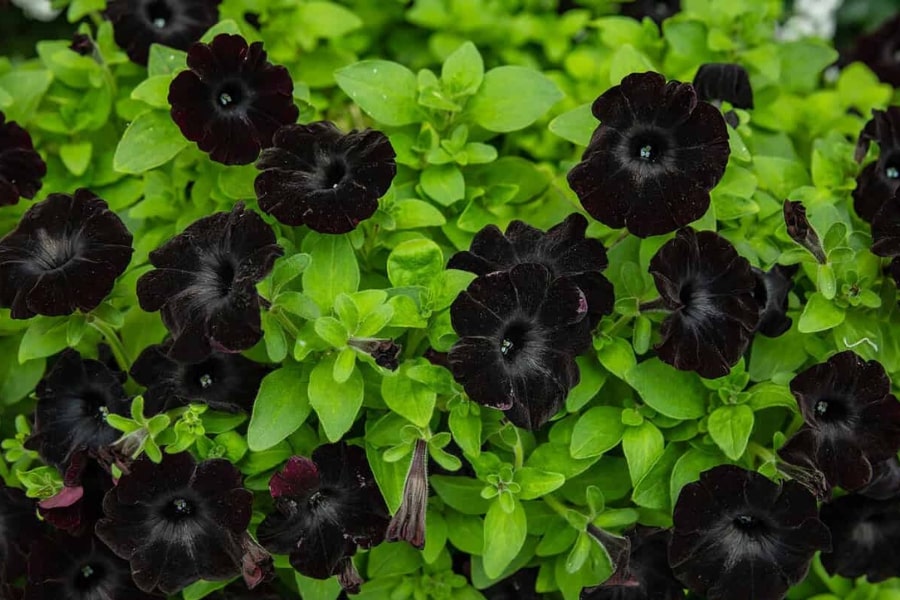
Leaves and Flowers
Petunia leaves are typically oval or lance-shaped and have a somewhat sticky or hairy texture. They are arranged alternately along the stems and can range in color from deep green to variegated or even purplish tones. The leaves add visual interest to the plant even when not blooming.
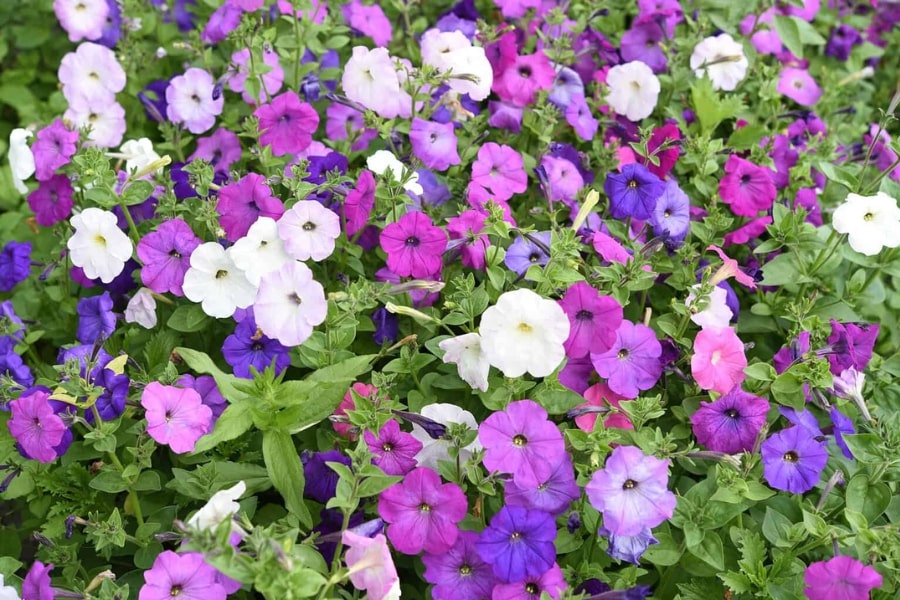
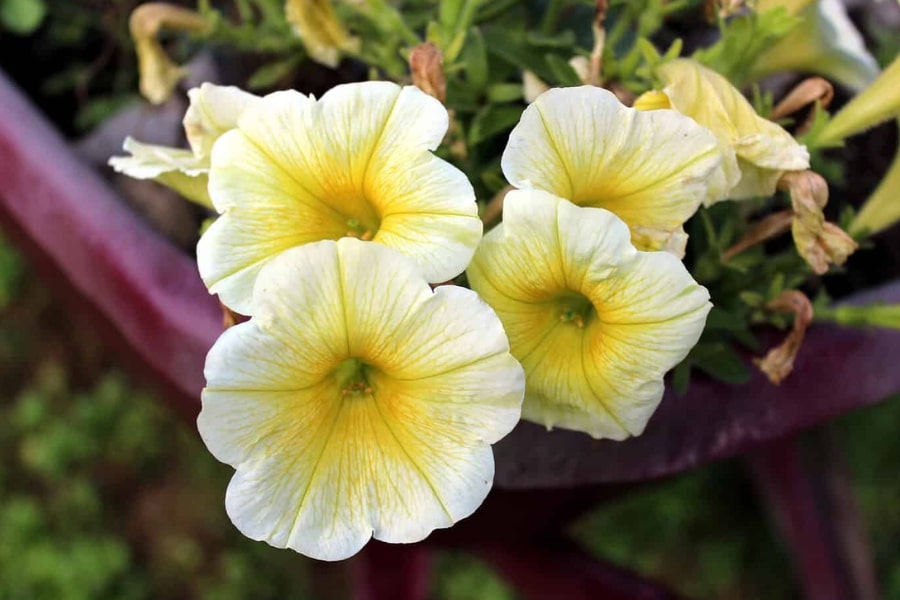
The true attraction of Petunias lies in their profusion of colorful and trumpet-shaped flowers. These blooms come in various colors, including white, pink, purple, red, yellow, and blue. The flowers can be solid in color or showcase intricate patterns, stripes, or contrasting edges. In addition, they are known for their delicate fragrance.
Uses in the Garden
Petunias are a garden favorite, offering vibrant color and continuous blooms from Spring until frost. Their versatility makes them perfect for flower beds, borders, hanging baskets, and container gardens, where their trailing or mounding habit adds lushness and charm. Petunias thrive in full sun and well-drained soil, creating stunning displays when planted in mass groupings or combined with complementary flowers like Calibrachoa, Verbena, and Geraniums. Their bold colors and wide variety of shades, from soft pastels to deep purples and reds, allow for endless design possibilities in both formal and informal garden settings.
In addition to their visual appeal, petunias are excellent for attracting pollinators like bees, butterflies, and hummingbirds, making them a great choice for wildlife-friendly gardens. Their resilience and ability to tolerate heat and mild drought conditions make them an easy-care option for gardeners of all skill levels. Petunias also work well in edging and pathway plantings, where their spreading growth habit fills in spaces beautifully.
Frequently Asked Questions
Do Deer Eat Petunias?
Deer are known to avoid eating petunias in most cases. Petunias are often considered deer-resistant plants due to their bitter taste and intense aroma. However, individual deer feeding behavior can vary, and in times of extreme food scarcity, deer may nibble on plants they would normally avoid. Taking precautions such as using deer repellents or installing fencing can further help protect petunias from potential deer browsing.
Why Are My Petunias Wilting?
Wilting petunias are almost always a sign that something in their environment has gone wrong, and catching the issue early can save your plants. In many cases, wilting is linked to one of a handful of common problems—including watering mistakes, root stress, pests, heat, or disease.
- Underwatering – Petunias rely on steady moisture, especially during hot spells. If the soil dries out too deeply, the plants collapse quickly. Water deeply and keep the soil lightly moist—not bone-dry and not soggy.
- Overwatering – Too much water suffocates roots and leads to rot, which also causes wilting. Make sure your containers or beds drain well and avoid letting water pool around the root zone.
- Root Problems – Damaged or rotting roots cannot take up water, even if the soil is wet. Gently check the root ball for browning, mushiness, or a foul smell—classic signs of rot
- Nutrient Deficiencies – Petunias are heavy bloomers, and when they run low on nutrients (especially nitrogen), they may wilt, yellow, or stall out. Feed with a balanced fertilizer for steady growth and color
- Heat Stress – Extreme heat can cause petunias to flop midday, particularly if they dry out faster than you can water. Afternoon shade and increased watering during heatwaves often correct the issue.
- Pests – Aphids, spider mites, and caterpillars stress the foliage and stems, which can lead to wilting. Inspect the undersides of leaves and treat promptly if you spot pests.
- Disease – Issues like Botrytis or Fusarium wilt can cause drooping, yellowing, or sudden dieback. Remove affected areas and treat with a fungicide if symptoms spread.
For a full list of symptoms, photos of what to look for, and step-by-step fixes, visit this in-depth troubleshooting guide: Why Are My Petunias Dying?
Do Petunias Have A Scent?
While some varieties of petunias do have a fragrance, not all of them do. Traditional garden petunias, such as those with large, ruffled flowers, often have a pleasant, sweet fragrance, especially in the evening. However, many modern hybrid petunias have been bred primarily for their appearance and may not have a noticeable scent. When selecting your plants, if fragrance is important to you, look for specific cultivars labeled as “scented” or “fragrant” petunias.
Do Slugs Eat Petunias?
Yes, slugs are known to eat petunias. These pests can cause damage to petunias by chewing holes in the leaves and flowers, which can affect the plant’s overall health and appearance. Slugs are particularly active at night and during damp conditions, making them a common nuisance in gardens where petunias are grown.
To protect your petunias from slug damage, you can take several preventive measures:
- Remove hiding places: Slugs often hide in dark, damp areas during the day. Reduce potential hiding spots by cleaning up garden debris, mulch, and leaf litter around your petunias.
- Handpick: Go out at night with a flashlight and handpick slugs from your petunias. This method can be effective for controlling slug populations in smaller garden areas.
- Apply slug repellents: Various slug repellents are available, including natural and chemical options. Some gardeners use substances like coffee grounds, crushed eggshells, or slug-specific repellent products to discourage slugs from feeding on their plants.
- Encourage natural predators: Some predators, such as certain birds, frogs, toads, and ground beetles, feed on slugs. Encourage these beneficial creatures to inhabit your garden by providing suitable habitats and minimizing pesticide use.