
Violas are a must-have for Southern winter gardens, blooming from fall through early spring and thriving even after occasional snow and ice. Their resilience makes them a reliable choice for brightening up the landscape during the colder months. With their dense, colorful display and ability to withstand winter weather, violas add long-lasting beauty to garden beds and containers.
We keep over 200 flats of violas in stock from September through early November, then reduce to around 80 flats through mid-February to early March. While upright violas are perfect for landscaping and containers, they are less common in hanging baskets than trailing pansies. Their compact, floriferous nature makes them a favorite for gardeners looking for reliable winter color that lasts through the season.
Our Selection of Viola
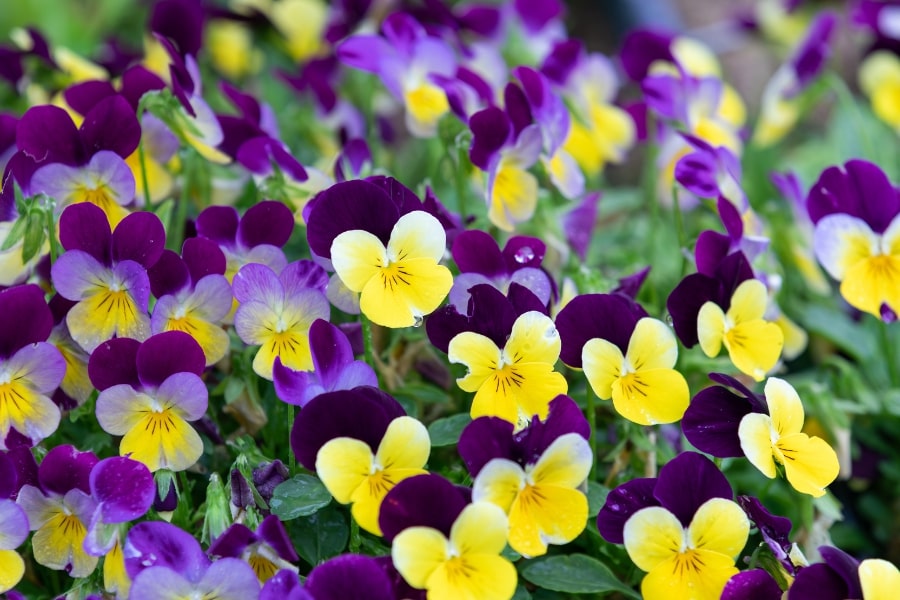
At Martin Garden Center, we sell thousands of Viola flats each year, offering a wide selection in 4-packs and flats sourced from trusted vendors. Popular series include Colormax, Penny, and Sorbet, along with many other specialty varieties. Violas’ smaller but abundant blooms create a vibrant carpet of color, making them ideal for mass plantings or adding texture to mixed containers.
Growing and Caring for Violas
Violas thrive in conditions that favor cool weather and steady moisture. They prefer full sun to partial shade, but in regions with hot afternoons, providing some protection from the strongest sun will extend their blooming season. Aim for 4–6 hours of sunlight daily for best performance. Violas grow well in fertile, well-draining soil with a slightly acidic to neutral pH. Enriching heavy or sandy soils with compost helps improve texture and fertility. For container planting, use a lightweight potting mix designed for annuals and cool-season flowers.
Violas are remarkably tolerant of cool temperatures and can withstand light frosts, making them ideal for early spring and fall plantings. In regions with mild winters, they may bloom right through the colder months. Summer heat, however, often causes them to fade or go dormant. To maintain vigorous plants, water regularly to keep soil evenly moist but avoid soggy conditions. Mulching around plants helps conserve moisture and regulate soil temperature. Feed every 2–3 weeks with a balanced, water-soluble fertilizer to encourage steady growth and prolific flowering. Regular deadheading keeps violas blooming longer and maintains a tidy appearance.
Leaves and Flowers
Viola foliage is typically small, oval to heart-shaped, with scalloped edges and a smooth or slightly hairy texture. The leaves are arranged in compact rosettes, creating a neat mound that stays close to the ground. Their bright green color provides a soft, fresh background for the flowers.
The blooms are smaller than pansies, generally measuring 1 to 1.5 inches across, but they appear in great abundance. Violas have five delicate petals, often with distinctive whisker-like markings near the center that guide pollinators. Colors include violet, purple, blue, yellow, white, and multicolored blends, offering a wide palette for garden use. Some varieties are also lightly fragrant, adding another layer of charm to their display.
Uses in the Garden
Bedding Plants: Violas excel in beds, borders, and edging. Their compact size and abundant flowers make them ideal for filling gaps in the garden or creating colorful ribbons of blooms along pathways and garden edges.
Container Gardens: Violas adapt beautifully to containers, window boxes, and hanging baskets. Their smaller flowers mix well with larger-flowered plants, creating balanced and textured displays. Pair them with spring bulbs like tulips or daffodils for layered seasonal interest.
Seasonal Color: Because violas bloom reliably in cool weather, they are some of the first flowers to brighten up spring gardens and among the last to linger in fall. In mild climates, they provide winter-long color when few other plants are in flower.
Pollinator Gardens: Violas attract bees and other small pollinators looking for nectar in early and late seasons. Their markings act as nectar guides, making them especially valuable in pollinator-friendly gardens.